
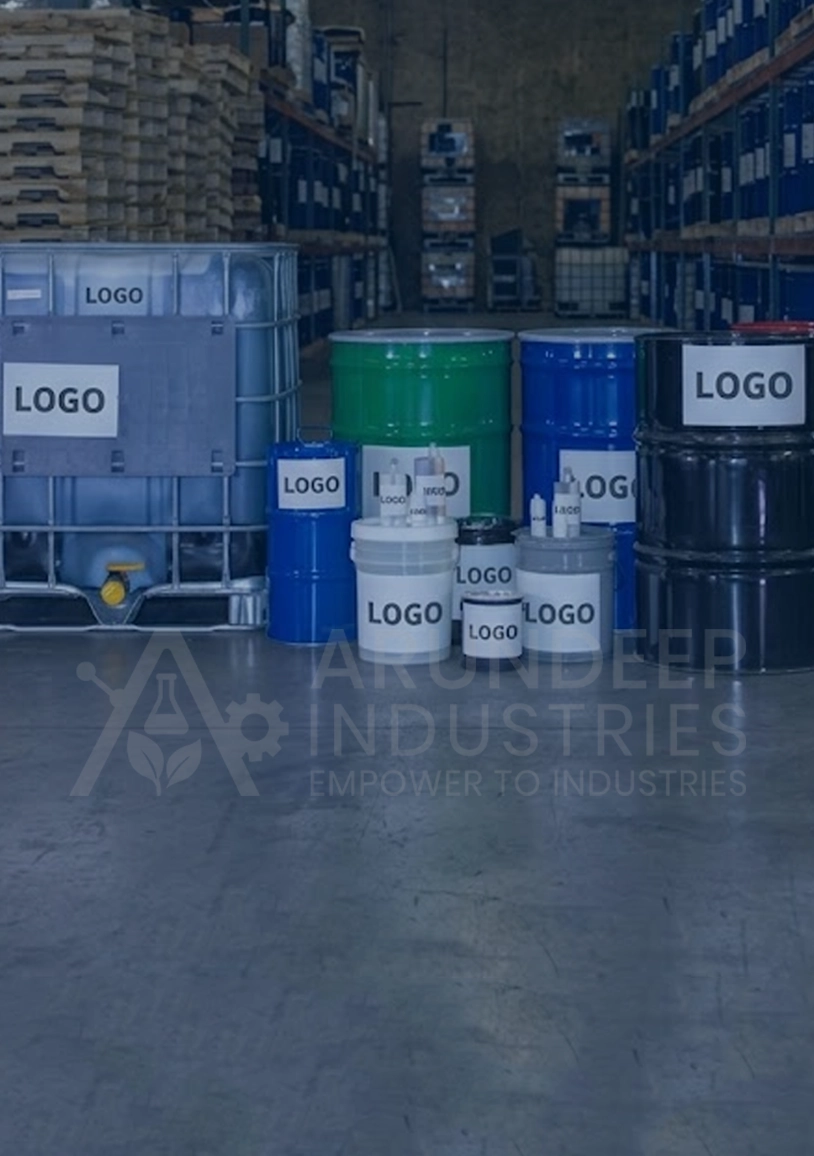
White labelling in the chemical industry allows businesses to market chemical products under their own brand name while relying on structured supply and coordination support. Our white labelling services are designed for companies seeking to expand their product portfolio without investing in production infrastructure.
We support white labelling across acidulants, sweeteners, food chemicals, industrial chemicals, and specialty chemicals. Whether you operate in food and beverage, nutraceutical, pharmaceutical, personal care, or industrial sectors, our focus is to ensure that products supplied under your brand align with defined specifications, documentation requirements, and market expectations.
Our approach emphasizes clarity, consistency, and responsible coordination to help you build brand presence with confidence.
White labelling involves supplying chemical products that are packaged and branded under your company’s identity while maintaining alignment with technical specifications and regulatory expectations. This may include coordinating packaging formats, labeling elements, documentation, and batch-level consistency.
For food and nutraceutical sectors, attention to ingredient declaration and compliance documentation is critical. In industrial and specialty chemical markets, labeling accuracy and handling instructions play an important role. Our role is to ensure that brand presentation and technical alignment work together seamlessly.
White labelling is not simply repackaging - it is structured coordination that protects both product integrity and brand credibility.
Each industry carries different expectations when it comes to chemical product branding and distribution. Food and beverage businesses must maintain ingredient transparency and regulatory compliance, while pharmaceutical and nutraceutical markets require precision in labeling and documentation.
Personal care and specialty chemical brands often prioritize positioning, packaging consistency, and performance reliability. Industrial chemical suppliers require clarity in product handling, safety information, and application guidelines. By understanding these sector-specific expectations, we help ensure that white-labelled products reflect both technical accuracy and professional brand representation.
Every white labelling engagement begins with understanding your branding objectives, target market, and product requirements. We coordinate packaging formats, labeling alignment, and documentation support to ensure that chemical products meet both brand and compliance standards.
Consistency across repeat supply cycles is essential in maintaining customer trust. Structured documentation confirmation and specification tracking help preserve alignment between product performance and brand commitments. Through disciplined coordination, we aim to simplify the process of introducing and maintaining branded chemical products in your market.
When supplying white-labelled chemical products, maintaining regulatory alignment and documentation clarity is critical. We emphasize traceability, specification confirmation, and responsible communication to ensure that products supplied under your brand meet applicable standards.
This is particularly important for food-grade chemicals, nutraceutical ingredients, and regulated industrial applications. By integrating compliance awareness into the white labelling process, we help protect both operational continuity and brand reputation.
White labelling involves supplying chemical products that are packaged and marketed under your brand name while maintaining defined technical specifications and documentation alignment.
White labelling support is available across acidulants, sweeteners, food chemicals, industrial chemicals, and specialty chemicals based on defined requirements.
Yes, white labelling can be aligned with compliance documentation and regulatory expectations required in food, nutraceutical, pharmaceutical, and industrial sectors.
Yes, packaging formats and labeling elements can be coordinated to reflect your brand identity while maintaining technical accuracy.
Consistency is maintained through clear specification confirmation, structured documentation handling, and coordinated supply cycles.